
The best memory games for kids do something worksheets rarely manage: they make children want to remember. A child who groans at a spelling list will happily flip cards for twenty minutes trying to find a matching pair, and a child who hates revision will chase a better score in a memory game without realising they are practising. Good memory games for kids ask a child to hold something in mind for a few seconds and then use it: the spot where a matching card was hiding, the order a set of lights flashed, or a number that just disappeared. Every game below is free, runs in the browser with no download and no account, and has no chat or strangers. They are organised by age, so you can start at the right level.
Ages 4 to 6 — matching first
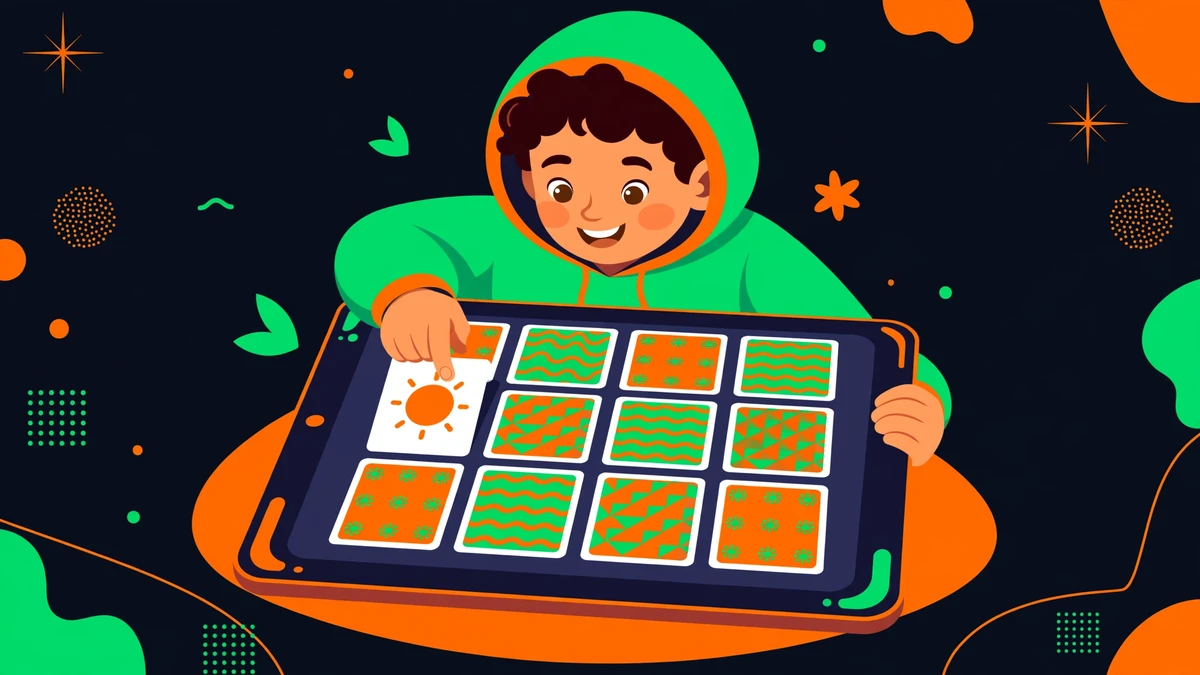
At this age, memory is matching: flip two cards, remember what you saw, find the pair. Memory Match Cards is the starting point — the classic flip-two-cards game, and the easiest one here to play together on one screen. Start on a small board: twelve cards means six pairs, which most young children can clear in a few minutes. Colour Matching builds the visual skills memory depends on — sorting, grouping, and telling things apart — which are the foundations of sets and patterns later on. Shape Sorting teaches shapes and sorting, the first step toward geometry: circles, squares, triangles, and putting each one where it belongs. These three games work best in short sessions — ten minutes at a time, with a parent nearby to celebrate the wins.
Best for: preschool and early primary. Session length: 10 minutes.
Ages 7 to 10 — bigger boards and patterns
At this age, children are ready for harder memory work — and for games that reward remembering more. Memory Match Cards on a bigger board is the centrepiece: more cards, more pairs, and a genuine contest of attention, where the player who remembers the board best wins. Children often beat adults at it, which is exactly why they love it. Sliding Picture Puzzle builds spatial memory — remembering where each piece belongs and planning the moves to get it there — the skill behind geometry and mental rotation. Counting Fun adds number memory to the mix: recognising numbers and counting objects, one tap at a time, which trains the working memory that maths depends on — holding numbers in your head while you work with them.
Best for: primary school, ages 7 to 10. Session length: 15–20 minutes.
How the best memory games for kids help
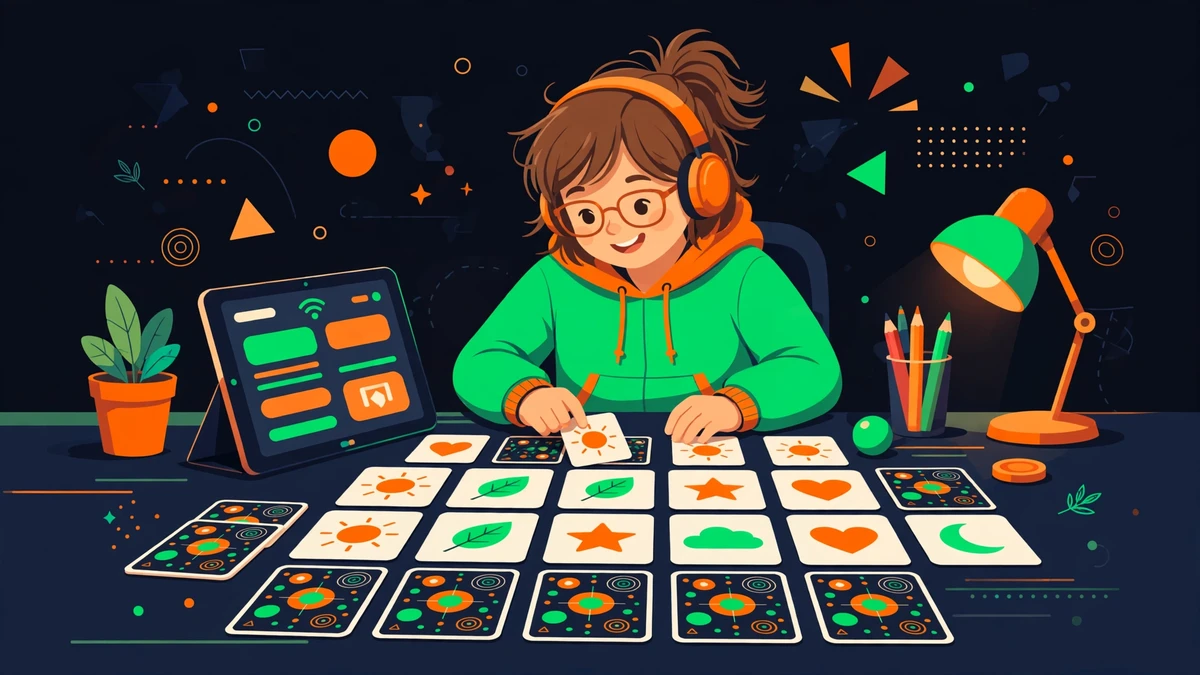
Memory games practise four kinds of remembering. Card matching trains visual memory — where things are. Sequence games train order memory — what came next. Number games train working memory — holding a number in mind while using it. Pattern games train spatial memory — how things fit together. A child who plays all four is practising the same skills school asks for — remembering instructions, holding numbers in mind during a sum, recalling where things are — but in a game, where getting it wrong just means flipping the cards back and trying again. That is why the best memory games for kids work across ages: the same four kinds of remembering, from a twelve-card board to a bigger one.
A simple weekly plan
Monday: Memory Match Cards on a small board — matching only, ten minutes. Tuesday: Colour Matching and Shape Sorting — sorting and grouping. Wednesday: Memory Match on a bigger board — more cards, more pairs. Thursday: Sliding Picture Puzzle — spatial memory and planning. Friday: Counting Fun — number memory. Weekend: free choice — let your child pick their favourite and play it with you. One game a day, rotating through matching, patterns and numbers, covers more skills than playing the same game every day — and a child who chooses the game will play it longer than a child who is told to.
How parents can use them
Keep sessions short. Fifteen to twenty minutes is enough — the games work best in focused bursts, not marathon sessions, and a child who stops while still having fun will want to come back tomorrow. Play together. Sit beside your child for the first few games: talk through the moves out loud, and let them explain their thinking to you. Children learn more from explaining than from being told. Praise effort, not scores. A child who flips the wrong card and tries again is learning more than a child who gets everything right — celebrate the retry, not just the win. Rotate the games. One game a day, rotating through matching, patterns and numbers, keeps things fresh and covers more skills than playing the same game every day.
Why these games and not an app
Most memory apps want an account, a subscription, or both — and many show ads that are not meant for children. Every game on this list is free, needs no sign-up, and has no chat, no strangers, and no paywall: open the link, play, close the tab. That is the whole point of browser games for kids — the game is a link, not a commitment, and a parent can check exactly what their child is playing just by opening the same link. A parent can also watch one round first and decide in a minute whether the game suits their child. The best memory games for kids ask for none of that: no sign-up, no chat, no strangers, and no paywall — just a link a parent can open and check.
Start playing
Every game above is free on the Games page — open one with your child and play a round together. If you want the wider list, read our Learning Games for Kids guide for all learning games by age, or our Best Math Games for Kids for the maths set. Browse all kids games on the Games page. Pick one from the best memory games for kids above, play a round together, and let your child choose the next one.