
The best learning games for kids do not feel like lessons. They feel like games — and the learning happens while the child is busy having fun. A good learning game is short, colourful, instantly understandable, and rewarding on the first try. It needs no download, no account, and no parent hovering over the keyboard. Here are the best free learning games for kids ages 5 to 10, all playable in the browser right now.
Why game-based learning works
Children learn by doing, not by watching. A maths quiz that pops a balloon for every right answer teaches the same addition as a worksheet — but the child asks to play it again. Short game loops, instant feedback and small rewards keep attention far longer than a page of sums. The trick is picking games matched to the child’s age and to one skill at a time, then keeping sessions short: paediatric guidance suggests limits and co-play for younger children, so sit nearby, play together, and stop while it is still fun.
1. Maths Quiz Adventure — arithmetic that feels like a quest
Maths Quiz Adventure wraps addition, subtraction and multiplication in a game loop: answer fast, score points, climb the adventure. It is the best first learning game on this list because it is pure practice disguised as play — the child does dozens of sums in a session without noticing.
Ages: 5–10. Skills: addition, subtraction, multiplication, quick recall.
2. Alphabet Learning — letters, sounds and order
Alphabet Learning teaches the alphabet the way children actually learn it: by seeing, hearing and ordering letters through play. It suits the youngest players on this list and works well as a first game for a child who is just starting school.
Ages: 5–7. Skills: letter recognition, alphabet order, early reading.
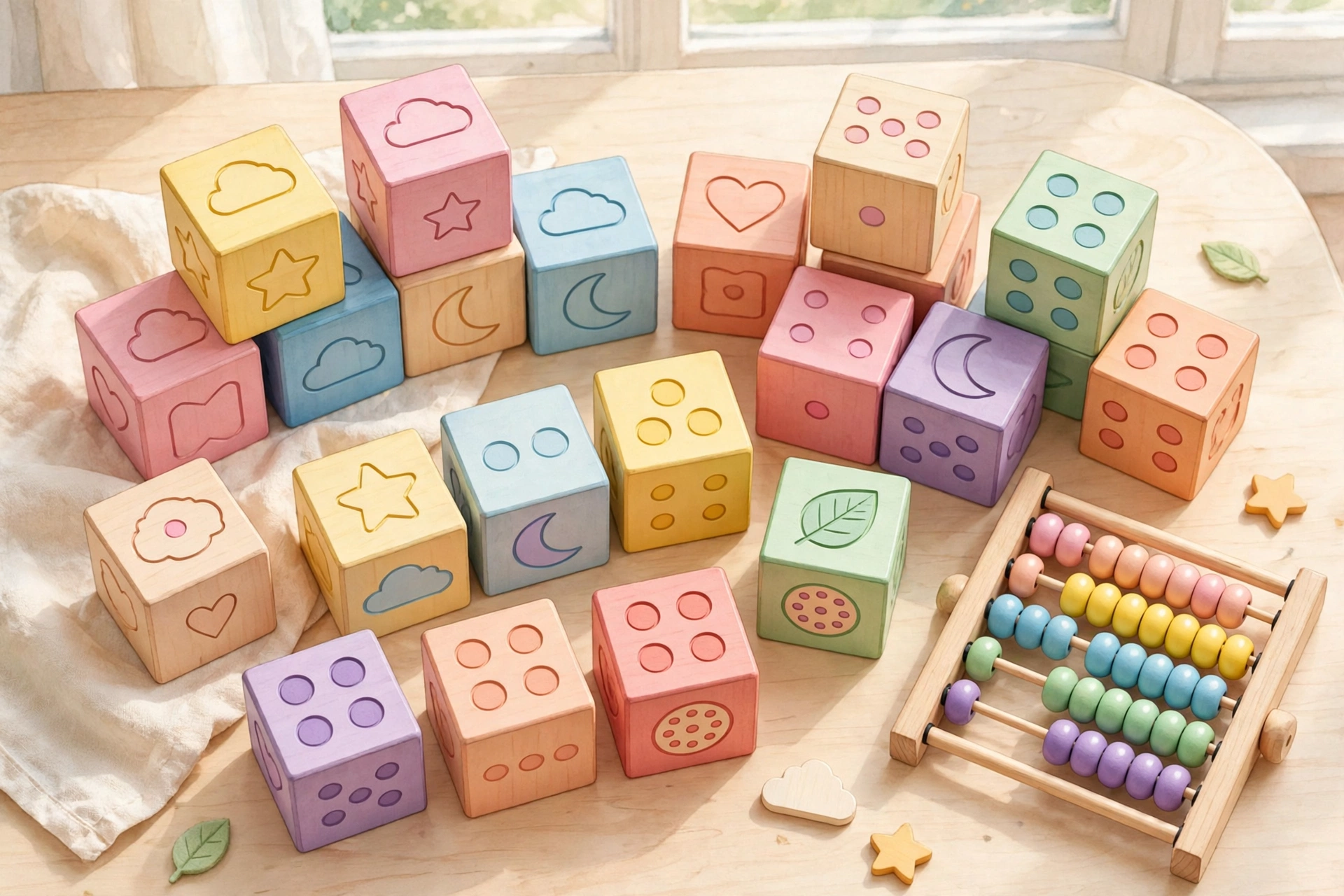
3. Colour Matching — colours, patterns and focus
Colour Matching is simple on purpose: match the colours, spot the pattern, finish the round. It builds visual discrimination and attention — the same skills that later help with reading and maths — and it is calm enough for the end of the day.
Ages: 5–8. Skills: colour recognition, pattern spotting, concentration.
4. Counting Fun — numbers you can see
Counting Fun makes numbers concrete: count the objects, tap the answer, watch the score grow. It is the bridge between knowing numbers and using them, and it is the best game here for a child who can recite to ten but is still learning what ten means.
Ages: 5–8. Skills: counting, number sense, one-to-one matching.
5. Shape Sorting — geometry without the textbook
Shape Sorting teaches circles, squares, triangles and rectangles by sorting them into the right places. It sounds basic, but shape recognition is the foundation of geometry — and of reading, since letters are shapes too.
Ages: 5–8. Skills: shape recognition, sorting, early geometry.
6. Memory Match — the brain workout that works for everyone
Memory Match Cards is the one game on this list that adults enjoy as much as children. Flip two cards, find the pair, remember where everything is. It trains visual memory and attention in two-minute rounds, and it is the easiest game here to play together — parent against child, best of three.
Ages: 5–10. Skills: visual memory, attention, concentration.
7. Animal Sounds Quiz — listening and learning
Animal Sounds Quiz asks children to match sounds to animals. It builds listening skills and animal knowledge at the same time, and it is the most giggle-prone game on this list — which is exactly why children ask for it again.
Ages: 5–9. Skills: listening, animal recognition, vocabulary.
How to choose by age
Ages 5–6: Alphabet Learning, Colour Matching, Counting Fun. Short rounds, big buttons, one skill at a time. Ages 7–8: Maths Quiz Adventure, Shape Sorting, Animal Sounds Quiz. Slightly longer sessions, gentle challenge. Ages 9–10: Memory Match, Maths Quiz Adventure on harder settings, and our puzzle games — Sudoku and 2048 Number Merge — which build logic and planning.
A simple weekly routine
You do not need a timetable — just a rhythm. Monday: ten minutes of Maths Quiz Adventure after homework. Wednesday: a Memory Match duel, parent against child, best of three. Friday: a free-choice game night — let the child pick any game on the Kids Learning list. Weekend: one board game together, like Ludo, where the learning is counting, turn-taking and coping with losing gracefully. Short, regular sessions beat one long weekend binge: fifteen minutes a day builds far more than an hour once a week, and stopping while it is still fun is what makes the child come back tomorrow.
A note for parents
Every game on this list is free, runs in the browser, and needs no sign-up — there is nothing to install and no account to create. There is no chat, no strangers, and nothing to buy inside the games. Sit with younger children, keep sessions to 15–20 minutes, and treat the games as something you do together rather than a babysitter.
Start playing
All seven games are on the Games page under Kids Learning — open one and let your child try it. For older children who are ready for board games, our guide on How to Play Ludo Online is a great family next step.
Want maths games only? Read our Best Math Games for Kids to Play Online Free list — counting, quizzes, 2048 and Sudoku, by age group, with no download, no sign-up and no chat.
For memory only, see our Best Memory Games for Kids Online Free.
Also see: Best Kids Learning Games Online