
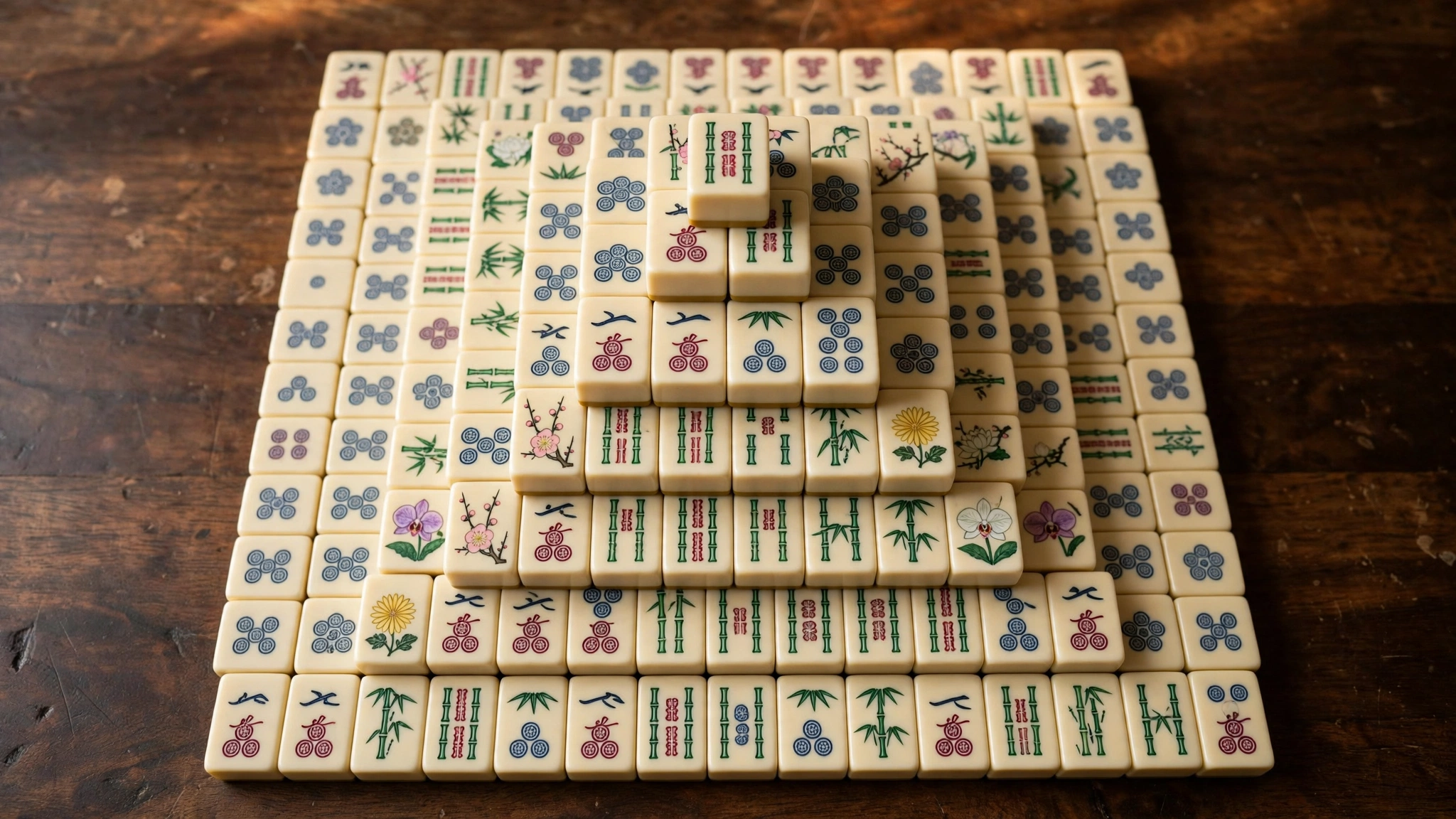
Mahjong solitaire is the quietest game on this site and one of the most satisfying: a board covered in tiles, every tile with a picture on it, and one rule — match two identical tiles and they disappear. There is no timer chasing you, no enemy to beat and no score to defend; the only question is whether you can clear the whole board before the tiles run out of matches. It looks simple for the first minute, and then the board tightens, the pairs hide under other tiles, and a wrong match early on can block the whole game. This guide explains how to play mahjong online, the rules, and the habits that clear the board — and it works on the free Mahjong on this site, which plays right in your browser with no download and no sign-up needed.
How the game works
The board starts as a stack of tiles arranged in a pattern — sometimes a turtle, sometimes a pyramid, sometimes a simple rectangle — with tiles layered on top of each other. Each tile shows a picture: a character, a bamboo stick, a circle, a flower, a season or a dragon. Two tiles match if they show the same picture, and matching them removes both from the board. The catch is the rule that decides everything: a tile is only free if nothing sits on top of it and at least one of its long sides is open. A tile buried under others, or squeezed between two neighbours, cannot be played at all. The game ends in one of two ways: you clear every tile and win, or no free tiles match and the board is stuck. There is no losing by the clock — the only enemy is the board itself, and the only skill is seeing which pairs to take first.
How to play mahjong online: match the free tiles first
The single most important habit is to match the free tiles first, not the ones that look easiest. A free tile is one with nothing on top of it and an open side — and every match you make should free up more tiles than it costs you. Start with the tiles on the top layer and the outer edges, because those are the ones blocking everything below them. When two pairs are available, take the pair that uncovers the most new tiles: a match that opens three tiles underneath is worth more than a match that opens none. Look for the tiles that are holding the board together — the ones sitting on top of a stack — and clear them early, before the board gets tight. Players who match at random clear the easy tiles first and then discover the board is stuck; players who match the blockers first keep the board open until the end. Some boards also use special tiles: flowers and seasons match any other flower or season, so they are the most flexible tiles on the board, and dragons and winds match only their own kind. Learn which tiles are special before you start, because a flower matched early is a move wasted, and a flower saved for the end can rescue a board that has no other matches left.
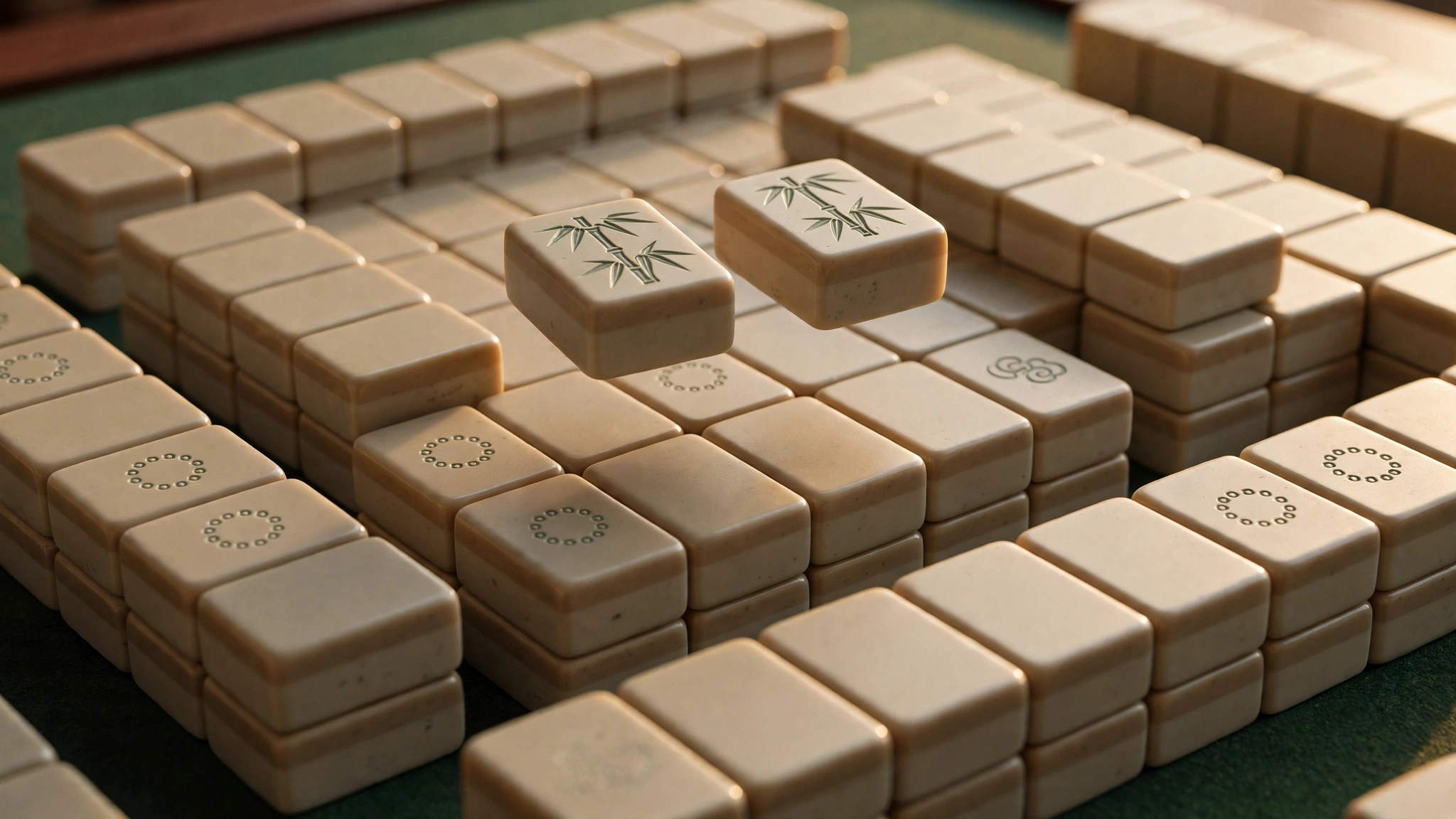
Work from the edges, not the middle
The middle of the board is a trap: it looks busy and full of matches, but the tiles there are usually buried under others and cannot be played. The edges are where the game is won. The tiles on the left and right ends of each row are free more often, and clearing them opens the rows underneath. Work one layer at a time: clear the top layer before you worry about what is below it, and clear the ends of a row before you work toward its centre. And when a tile has only one match left on the whole board, protect it — if you match that tile’s pair with something else first, the lone tile becomes unplayable and the board can lock. The same rule applies to flowers and seasons, which match any other flower or season: save those flexible tiles for the end, when nothing else matches and you need one more move.
Mistakes that block the board
Four mistakes block more mahjong boards than anything else. The first is matching the easy pairs first, so the board looks clear while the tiles underneath stay buried. The second is ignoring the tiles on top of a stack — the blockers — until they are the only tiles left and nothing can move. The third is using the flexible flower and season tiles too early, when an ordinary pair would have done the same job. And the fourth is playing too fast, clicking the first pair you see instead of scanning the whole board for the match that opens the most tiles. If a board gets stuck, think about which of the four it was, fix that one thing, and play again. How to play mahjong online is a simple question with a simple answer: free the blockers, work the edges, save the flexible tiles — and the board will clear itself, pair by pair.
Outbound links: https://en.wikipedia.org/wiki/Mahjong_solitaire — Wikipedia: Mahjong solitaire, the game